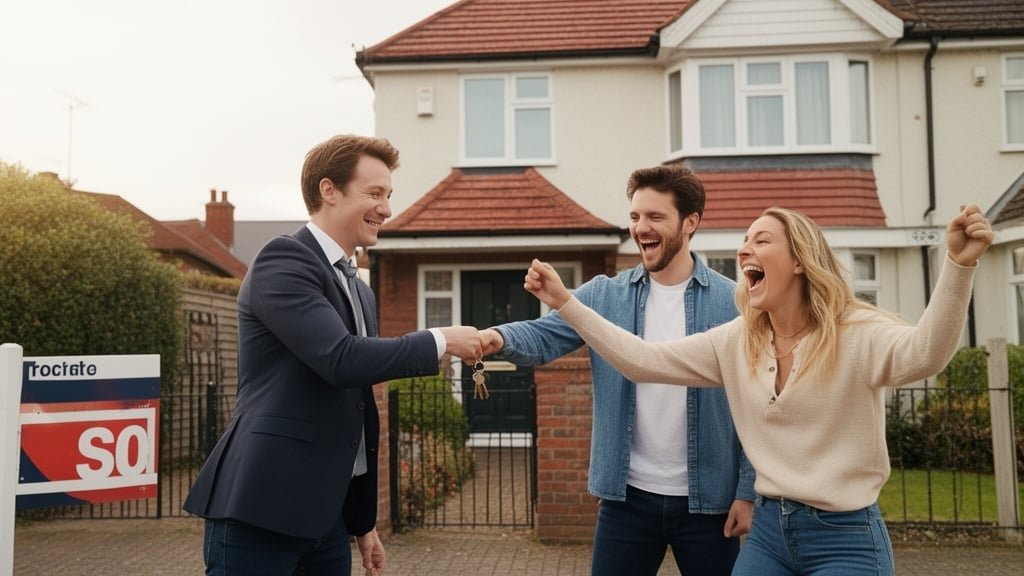
My Home Buyers Survey helps first-time buyers navigate the confusing world of home surveys. If you're buying your first property, getting the right survey protects your investment and gives you peace of mind. Read our Complete Guide to Home Surveys for a comprehensive overview.
Why First-Time Buyers Need a Home Survey
Buying your first home is exciting but nerve-wracking. You're making the biggest purchase of your life, probably borrowing hundreds of thousands of pounds, and hoping nothing goes wrong. A professional home survey is your protection against nasty surprises.
Last year, I met Sarah, a first-time buyer purchasing a lovely Victorian terrace in Birmingham for £240,000. She'd stretched her budget to the limit and wondered if she could skip the survey to save £550. "The house looks perfect," she told me. "Surely I don't need a survey?"
I convinced Sarah to get a RICS Level 2 survey. That decision saved her from financial disaster.
The survey revealed:
- Significant rising damp in two reception rooms (repair cost: £5,500)
- The roof needed re-felting within 12 months (cost: £6,800)
- Electrical wiring was dangerous and needed replacing (cost: £4,200)
- Evidence of previous structural movement (monitoring needed)
Total hidden problems: Over £16,000 worth of issues the viewings never revealed. Sarah renegotiated and got £14,000 off the purchase price. Her £550 survey saved her nearly £14,000 and prevented years of stress dealing with unexpected repairs on a tight budget.
Common First-Time Buyer Mistakes
1. Skipping the Survey to Save Money
This is the biggest mistake. A survey costs £400-£800 depending on the property. Unexpected repairs can cost £20,000+. The survey is cheap insurance against expensive disasters.
2. Confusing Mortgage Valuation with a Home Survey
Your mortgage lender will conduct a basic valuation to confirm the property is worth the loan amount. This is NOT a home survey. The valuation protects the lender, not you. It's a quick check that won't identify most defects or problems.
You need your own independent home buyers survey to protect YOUR interests.
3. Choosing the Wrong Survey Type
Not all surveys are equal. Choosing a Level 1 survey to save money when you really need a Level 2 or 3 can leave you vulnerable. Match the survey type to your property (more on this below).
4. Waiting Too Long to Book
Book your survey as soon as your offer is accepted. Don't wait until exchange is imminent. You need time to digest the findings and potentially renegotiate or pull out if necessary.
5. Not Reading the Report Properly
When your survey report arrives, read it thoroughly. Don't just skim for red flags. Understanding all the issues, even minor ones, helps you plan future maintenance and repairs.
Which Survey Should First-Time Buyers Get?
The right survey depends on your property type, age, and condition. Here's my guidance for first-time buyers:
Get a Level 1 Survey (Condition Report) If:
- You're buying a new build property less than 10 years old
- It's a modern flat in excellent condition
- You're buying a newly renovated property with guarantees
- You want basic peace of mind at minimum cost (£350-£450)
My advice: Level 1 surveys suit very few properties. Most first-time buyers are better off with Level 2.
Get a Level 2 Survey (Homebuyer Report) If:
- You're buying a conventional house built in the last 100 years
- The property appears to be in reasonable condition
- It's standard construction (brick walls, tiled roof, etc.)
- You want comprehensive information and a valuation (£450-£800)
My advice: This is the right choice for 70% of first-time buyers. It provides excellent value and comprehensive information.
Get a Level 3 Survey (Building Survey) If:
- You're buying a property built before 1900
- The property is in poor condition or needs renovation
- It's unusual construction or has been significantly altered
- You're planning major works and need detailed guidance (£750-£1,500+)
My advice: Don't be put off by the higher cost if your property needs this level of survey. It's worth every penny for older or problematic properties.
For detailed information on all survey types, visit our services page.
The First-Time Buyer Survey Process
Step 1: Offer Accepted
Once your offer is accepted, immediately start looking for a surveyor. Don't delay – the buying process moves quickly, and you need time to act on survey findings.
Step 2: Choose Your Surveyor
Select a RICS-accredited surveyor. Get quotes from 2-3 surveyors and compare not just price, but experience, qualifications, and turnaround times.
What to check:
- RICS registration (essential)
- Professional indemnity insurance
- Local knowledge of your area
- Experience with similar properties
- Clear communication style
- Sample reports to see quality
Step 3: Book and Pay
Most surveyors require payment upfront. You'll provide the property address and arrange access (usually through the estate agent).
Step 4: The Survey Visit
The surveyor visits the property (you don't need to be there). The inspection takes 1-4 hours depending on property size and survey type.
First-time buyer tip: If possible, attend the survey. Most surveyors are happy for you to accompany them (staying out of the way). You'll learn a lot about your future home and can ask questions.
Step 5: Receive Your Report
You'll get your survey report within 5 working days. Take time to read it carefully – every section matters.
Step 6: Act on the Findings
Based on the survey results, you have several options:
- Proceed as planned: If only minor issues found
- Renegotiate: Ask for a price reduction to cover repairs
- Request repairs: Ask the seller to fix issues before completion
- Pull out: If major problems make the property unviable
Understanding Your Survey Report
Survey reports use a traffic light system:
🟢 Green (Condition 1)
No repair is currently needed. Normal maintenance must be carried out. These are things in good condition requiring only routine upkeep.
🟡 Amber (Condition 2)
Defects that need repairing or replacing but are not considered serious or urgent. Plan and budget for these repairs.
🔴 Red (Condition 3)
Urgent defects requiring immediate attention or significant repairs. These are serious and could affect your decision to buy.
First-time buyer advice: Don't panic if you see amber or red ratings. Most properties have some issues. Focus on understanding the severity and cost of problems rather than expecting perfection.
What Does a Survey Cost vs What It Saves?
Let me share three real examples of first-time buyers I've worked with:
Example 1: Emma (Age 26)
Property: £185,000 two-bed flat, 1990s build
Survey cost: £450 (Level 2)
Issues found: Minor damp in bathroom, boiler at end of life
Outcome: Negotiated £3,000 off for boiler replacement
Saving: £2,550 profit on survey investment
Example 2: James (Age 31)
Property: £275,000 three-bed semi, 1960s
Survey cost: £600 (Level 2)
Issues found: Subsidence in rear extension, roof issues, damp
Outcome: Pulled out of purchase, avoided disaster
Saving: £40,000+ in repairs he'd have faced
Example 3: Lucy & Tom (Ages 28 & 29)
Property: £310,000 four-bed terrace, 1930s
Survey cost: £650 (Level 2)
Issues found: Nothing major, just normal maintenance needed
Outcome: Proceeded with confidence, no renegotiation
Value: Priceless peace of mind
In all three cases, the survey was worthwhile. Even when nothing major is found, you gain confidence in your purchase decision.
Common First-Time Buyer Questions
Can I buy a house without a survey?
Legally yes, but practically no. It's not worth the risk. Even properties that look perfect can have hidden problems. Always get a survey.
Will my mortgage lender arrange a survey?
No. The lender arranges a basic valuation (which you might pay for), but this isn't a home survey. You must arrange your own home buyers survey separately.
How long does a survey take?
The surveyor's visit takes 1-4 hours depending on property size and survey type. You'll receive the written report within 5 working days.
What if the survey finds problems?
Don't panic! Most surveys find some issues. Focus on understanding the severity and cost. You can then renegotiate, request repairs, or pull out if problems are too serious.
Should I get additional specialist surveys?
If your home survey identifies specific concerns (like suspected subsidence or extensive damp), your surveyor may recommend specialist investigations. These cost extra but provide detailed analysis of specific problems.
Can I use the survey to negotiate?
Absolutely! Survey findings are powerful negotiating tools. If significant repairs are needed, you can reasonably request a price reduction. Many buyers successfully renegotiate thousands off based on survey results.
First-Time Buyer Survey Budget
Budget for your survey alongside other buying costs:
Typical first-time buyer costs:
- Deposit: 5-10% of property value
- Stamp duty: Varies (first-time buyers get relief)
- Conveyancing: £800-£1,500
- Survey: £450-£800 (for Level 2)
- Mortgage arrangement fee: £0-£2,000
- Moving costs: £500-£1,500
The survey is a relatively small cost in the overall buying process but provides crucial protection for your investment.
Top Tips for First-Time Buyers
- Always get a survey – Never skip this step to save money
- Choose the right survey type – Match it to your property's needs
- Use a RICS surveyor – Don't compromise on qualifications
- Book early – As soon as your offer is accepted
- Read the report thoroughly – Don't just skim it
- Ask questions – Your surveyor can clarify anything unclear
- Don't expect perfection – Most properties have some issues
- Use findings to negotiate – Survey results are powerful leverage
- Budget for repairs – Plan financially for any issues identified
- Keep the report – It's valuable for future reference and resale
Conclusion: Your Survey is Essential Protection
As a first-time buyer, you're navigating an exciting but complex process. A professional home survey is one of the most important steps in buying your first property. It protects your investment, gives you negotiating power, and provides peace of mind.
Don't be tempted to skip the survey to save a few hundred pounds. That small saving could cost you tens of thousands in unexpected repairs and years of stress. Every first-time buyer should get a home survey – no exceptions.
Choose the right survey type for your property, use a qualified RICS surveyor, and read your report carefully. Armed with professional survey findings, you can proceed with confidence or renegotiate from a position of strength.
Ready to arrange your first home survey? Contact our expert RICS surveyors for guidance and a free quote. We're here to help first-time buyers make informed, confident decisions.
Related Articles
First-Time Buyer? Get Expert Help
Our RICS surveyors have helped thousands of first-time buyers. Get your free quote and expert advice today.
Get Free Advice & Quote