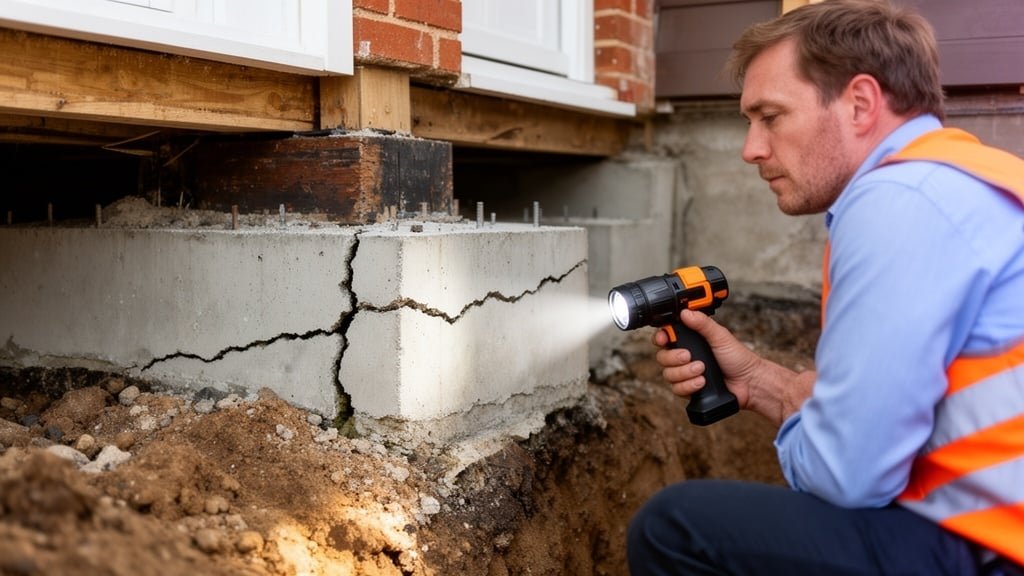
My Home Buyers Survey explains structural movement and subsidence - two of the most serious issues found during property surveys. Understanding these problems helps you make informed buying decisions. See our Complete Guide to Home Surveys for more information.
Understanding Structural Movement
All buildings move slightly over time - it's normal. The question isn't whether movement exists, but whether it's ongoing, progressive, and problematic. A professional Level 3 building survey assesses movement severity and implications.
Types of Structural Movement
- Subsidence: Downward movement due to ground beneath foundations moving or compressing
- Settlement: Normal initial downward movement as a building adjusts (usually harmless)
- Heave: Upward movement, typically from clay soil expansion
- Lateral movement: Horizontal shifting due to slope instability or retaining wall failure
Subsidence: The Serious Issue
Subsidence is progressive downward movement causing structural damage. It's one of the most expensive problems to fix, often costing £5,000-£50,000+ depending on severity.
Main Causes of Subsidence
1. Clay Soil Shrinkage
Clay soils shrink in dry weather and expand when wet. This cyclical movement damages foundations. The 2018 and 2022 droughts caused widespread subsidence across southern England.
2. Tree Root Damage
Trees extract moisture from soil, causing clay shrinkage. Large trees within 20 meters of properties (especially willows, poplars, oaks) are high risk. Tree removal can also cause heave as soil re-expands.
3. Leaking Drains
Drain leaks wash away supporting soil beneath foundations, creating voids that cause subsidence. Old properties with clay or pitch fiber drains are particularly vulnerable.
4. Nearby Construction
Excavation for extensions, basements, or neighboring developments can undermine foundations and trigger subsidence.
5. Mining and Ground Conditions
Old mine workings, natural cavities, or made ground (filled land) can cause subsidence as ground settles or collapses over time.
Recognizing Subsidence: Warning Signs
Serious Crack Patterns
Not all cracks indicate subsidence, but these patterns are concerning:
- Diagonal cracks: Running at 45° angles, especially near corners
- Stepped cracks: Following mortar joints in brickwork
- Wide cracks: Over 3mm wide (credit card thickness)
- Expanding cracks: Getting wider at one end (tapered)
- New cracks: Appearing suddenly or worsening quickly
Other Subsidence Indicators
- Doors and windows sticking or not closing properly
- Gaps appearing around window and door frames
- Sloping floors (particularly in one area)
- Rippling or bulging in walls
- Cracks appearing after drought periods
- External cracks continuing into internal walls
How Surveyors Assess Structural Issues
Visual Inspection
Surveyors examine crack patterns, widths, and locations. They assess whether cracks are old (stable) or recent (active). Professional experience distinguishes harmless settlement from serious subsidence.
Crack Monitoring
For properties with concerning cracks, monitoring over 6-12 months determines if movement is ongoing. Tell-tale devices or precise measurements track any progression.
Specialist Investigations
Serious cases require structural engineers who may conduct:
- Trial pit excavations to inspect foundations
- Soil analysis to assess ground conditions
- Drain CCTV surveys to check for leaks
- Level surveys to map floor slopes
Real Subsidence Survey Example
Last year, I surveyed a 1930s semi-detached house listed at £320,000. The property looked perfect during viewings, but my detailed inspection revealed concerning signs:
- Diagonal cracking in rear corner (5mm wide)
- Stepped cracking in external brickwork
- Recent internal wall cracks
- Slight floor slope toward affected corner
- Large oak tree 8 meters from house on clay soil
My survey report recommended specialist structural engineer assessment. The engineer confirmed active subsidence requiring underpinning. Estimated cost: £25,000.
Armed with this information, the buyers negotiated a £30,000 price reduction. They completed the purchase at £290,000 and had underpinning done immediately. Without the survey, they'd have faced this £25,000 surprise shortly after moving in.
Subsidence Repair Costs
Repair costs vary significantly based on severity and method:
| Repair Method | Typical Cost |
|---|---|
| Tree removal/management | £500-£3,000 |
| Drain repairs | £1,000-£5,000 |
| Underpinning (minor) | £10,000-£20,000 |
| Underpinning (extensive) | £20,000-£50,000 |
| Resin injection | £5,000-£15,000 |
Insurance and Subsidence
Existing Subsidence
Properties with subsidence history are harder to insure and premiums are higher. Some insurers won't cover properties with ongoing issues. Always disclose subsidence to insurers - non-disclosure invalidates policies.
Subsidence Cover
Standard home insurance includes subsidence cover, but:
- High excesses (typically £1,000-£5,000)
- May not cover pre-existing issues
- Previous claims affect future insurance
- Some areas/property types are exclusions
Getting Insurance After Subsidence
After subsidence repairs with guarantees (10+ years), insurance becomes easier. Specialist brokers can help find coverage, though premiums remain elevated for several years.
Buying a Property with Subsidence
Should You Buy?
This depends on several factors:
Don't Buy If:
- Ongoing active subsidence without identified cause
- Seller unwilling to address issues or negotiate
- You can't afford or obtain mortgage for repairs
- No insurance available
Consider Buying If:
- Subsidence was historic and repaired properly
- Repairs come with guarantees (10+ years)
- Price reflects the issue appropriately
- You can secure insurance
- Structural engineer confirms stability
Negotiation Strategies
Request Seller Arranges Repairs
Best option if seller will agree. Ensure work includes guarantee and structural engineer certification.
Negotiate Price Reduction
Get repair quotes from specialists. Request price reduction covering costs plus 10-20% for inconvenience and future insurance issues.
Walk Away
Sometimes the wisest choice, especially with ongoing subsidence and uncooperative sellers. Other properties exist without these problems.
Harmless vs Serious Cracks
Usually Harmless
- Hairline cracks (under 1mm)
- Vertical cracks in plaster only
- Cracks along ceiling/wall joints
- Old cracks that haven't changed in years
- Cracks in render only (not continuing into brick)
Potentially Serious
- Diagonal tapered cracks over 3mm wide
- Stepped cracking in brickwork
- Recent cracks or cracks getting worse
- Cracks both internally and externally in same location
- Multiple cracks in one area
Prevention and Monitoring
Preventing Subsidence
- Manage trees appropriately (prune, remove if necessary)
- Maintain drains (regular inspections)
- Keep ground levels appropriate around foundations
- Ensure adequate drainage
- Monitor for early warning signs
When to Get Professional Help
Contact a structural engineer if:
- New cracks appear or existing ones widen
- Doors and windows start sticking
- Floors develop slopes
- You're planning to remove trees
- Your survey flags potential structural issues
Conclusion
Structural movement and subsidence are serious issues requiring expert assessment. A professional building survey identifies warning signs that viewers miss. Whether you need a RICS Level 2 survey or Level 3 building survey, structural integrity is thoroughly assessed.
Never dismiss cracks as "just settlement" without professional evaluation. The cost of a survey is tiny compared to potential subsidence repair bills of £25,000-£50,000.
Concerned about structural issues? Contact our experienced surveyors for expert assessment and advice.
Related Articles
Worried About Subsidence?
Get expert structural assessment from our RICS surveyors.
Book Your Survey