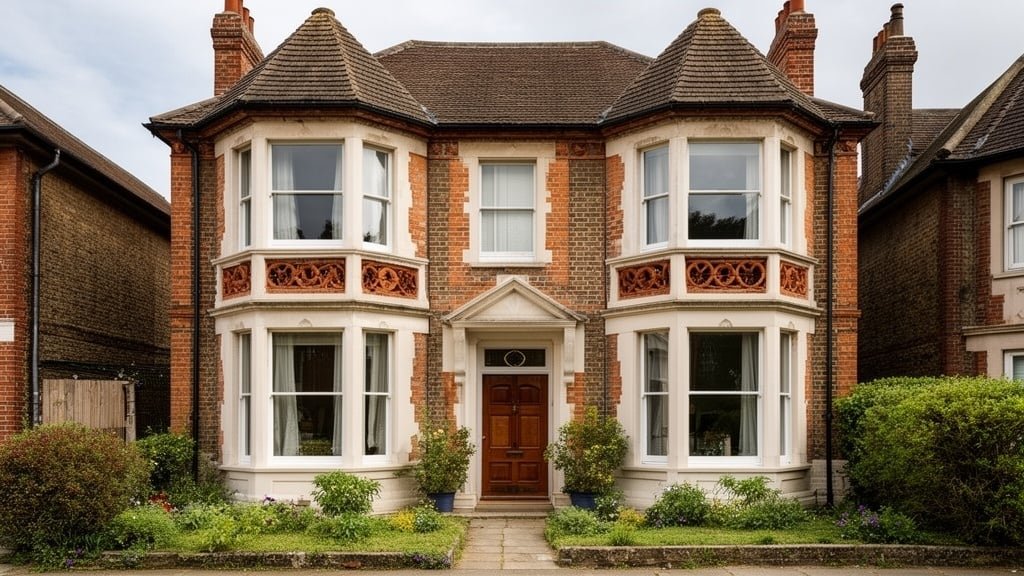
My Home Buyers Survey guides you through buying period properties (Georgian, Victorian, Edwardian). These characterful homes offer unique features but require careful surveying to identify age-related issues. For more information, see our Complete Guide to Home Surveys and Victorian House Survey Guide.
What Defines a Period Property?
Period properties are typically categorized by their architectural era:
Georgian (1714-1837)
- Symmetrical facades
- Sash windows
- Classical proportions
- High ceilings
- Often listed buildings
Victorian (1837-1901)
- Red brick construction
- Bay windows
- Decorative features
- High ceilings
- Original fireplaces
Edwardian (1901-1910)
- Lighter, airier designs
- Larger windows
- Simpler decoration
- Mock Tudor features
- Good room sizes
All period properties share common characteristics: solid wall construction, traditional materials, period features, and age-related maintenance needs. A Level 3 building survey is essential for these older homes.
Why Period Properties Need Specialized Surveys
Different Construction Methods
Period homes use materials and techniques unfamiliar to modern builders: lime mortar, solid brick walls, suspended timber floors, and traditional roof structures. Understanding these differences is crucial for accurate assessment.
Hidden Modifications
Over 100+ years, properties undergo countless modifications. Some are sympathetic and professional; others are bodged and dangerous. Surveys reveal the quality and safety of past alterations.
Aging Materials
All building materials deteriorate. After a century or more, original components often need attention or replacement. Knowing what to prioritize is essential for budgeting.
Common Period Property Issues
1. Structural Movement
Older properties, especially those on clay soils with shallow foundations, commonly show structural movement. Not all movement is problematic, but distinguishing between historic settlement and active subsidence requires expertise.
What to look for:
- Cracking patterns (diagonal, stepped, or tapering)
- Door and window alignment issues
- Floor slopes
- Wall bulging
Typical costs: Minor crack repairs (£500-£2,000), major underpinning (£10,000-£50,000+)
2. Damp and Moisture
Solid wall construction makes period properties more susceptible to damp issues than modern cavity wall homes. Original damp proof courses (if present) may have failed after 100+ years.
Common damp issues:
- Rising damp from failed or absent DPC
- Penetrating damp through solid walls
- Condensation from poor ventilation
- Moisture trapped by inappropriate cement repairs
Typical costs: Damp treatment (£3,000-£10,000), replastering (£50-£80/m²)
3. Outdated Services
Electrical, plumbing, and heating systems installed decades ago are often inadequate for modern living and may be dangerous.
Issues to address:
- Old electrical wiring (pre-1960s particularly concerning)
- Lead or iron pipes (health and reliability issues)
- Inadequate heating systems
- Poor energy efficiency
Typical costs: Full rewire (£4,000-£8,000), new heating system (£3,000-£7,000), re-plumbing (£3,000-£6,000)
4. Roof Issues
Period property roofs, while often built with quality materials like Welsh slate, need attention after 100+ years. Roofs are expensive to repair or replace.
Common problems:
- Aging or failed roof covering
- Deteriorated roof timbers
- Defective valleys and flashings
- Chimney stack deterioration
- Inadequate insulation
Typical costs: Re-roofing (£8,000-£25,000), chimney repairs (£1,000-£5,000)
5. Timber Decay
Woodworm, wet rot, and dry rot are common in older properties, affecting floor joists, roof timbers, and window frames.
Typical costs: Treatment and repairs (£2,000-£10,000 depending on extent)
Period Features: Treasure or Trouble?
Sash Windows
Value: Original sash windows add significant character and value
Issues: Rotten timber, broken cords, draughts, poor security
Costs: Restoration (£300-£800 per window), replacement with matching (£800-£1,500 per window)
Original Fireplaces
Value: Period fireplaces are highly desirable features
Issues: Chimney structural problems, missing parts, unsafe removals
Costs: Restoration (£500-£2,000), chimney work (£1,000-£8,000)
Decorative Plasterwork
Value: Cornicing, ceiling roses, and mouldings enhance character
Issues: Cracking (may indicate structural movement), water damage
Costs: Repairs (£200-£800), replacement sections (£300-£1,500)
Original Floorboards
Value: Wide Victorian/Edwardian boards are beautiful when restored
Issues: Rot, woodworm, poor sub-floor ventilation
Costs: Restoration (£25-£50/m²), board replacement (£30-£60/m²)
Buying Renovated vs Unrenovated Period Properties
Fully Renovated
Pros:
- Move-in ready
- Modern services installed
- Period features often restored
- No immediate renovation costs
Cons:
- Premium price
- May have hidden bodged work
- Modern additions might lack authenticity
- Previous owners reaped value increase
Survey focus: Ensure renovation quality is high, appropriate materials used, building regulations followed
Needs Full Renovation
Pros:
- Lower purchase price
- Control over renovation choices
- Potential for significant value increase
- Can ensure sympathetic restoration
Cons:
- Major expense (often £50,000-£150,000+)
- Time-consuming (6-18 months)
- Living elsewhere during work
- Unexpected issues will arise
- Stress and project management
Survey focus: Detailed condition assessment, structural integrity check, repair priorities, cost estimates
Conservation Areas and Listed Buildings
Conservation Area Rules
Many period properties sit in conservation areas with planning restrictions:
- Changes to external appearance need consent
- Tree work may require permission
- Demolition is usually prohibited
- Extensions face stricter scrutiny
Listed Building Constraints
Listed buildings (Grade I, II*, or II) have significant restrictions:
- Listed building consent needed for most alterations
- Must use appropriate materials and methods
- Interior features often protected
- Repairs must be sympathetic
- Grants may be available
Survey implications: Repairs cost more, some modern improvements prohibited, specialist contractors needed
Budgeting for a Period Property
Initial Purchase Costs
- Deposit (typically 10-15%)
- Stamp duty
- Survey (Level 3 essential: £750-£1,500)
- Conveyancing (£1,000-£2,000)
- Specialist reports if needed (£500-£1,500)
Ongoing Maintenance
Period properties cost more to maintain than modern homes:
- Higher insurance premiums
- More frequent repairs needed
- Specialist trades required
- Higher heating costs (solid walls)
Rule of thumb: Budget 1.5-2% of property value annually for maintenance and repairs
Renovation Reserves
Even "move-in ready" period properties need work within 5-10 years:
- Roof work (£10,000-£25,000)
- Window restoration (£5,000-£15,000)
- External redecorating (£3,000-£8,000)
- Heating system upgrades (£5,000-£10,000)
Finding the Right Surveyor
Period Property Experience Essential
Not all surveyors understand period construction. Choose someone with:
- Proven period property experience
- Knowledge of traditional materials and methods
- Understanding of conservation/listing implications
- Ability to distinguish character from defect
Questions to Ask
- How many properties of this age have you surveyed?
- Are you familiar with [Georgian/Victorian/Edwardian] construction?
- Do you understand lime mortar and traditional materials?
- Can you advise on sympathetic repair methods?
- Have you worked with listed buildings before?
Real Period Property Survey Example
Last month, I surveyed an 1890s Victorian terrace listed at £425,000. The property had been "renovated" but my survey revealed:
Positive findings:
- Beautiful period features retained
- Roof in good condition (re-slated 10 years ago)
- Recent rewiring and new heating system
Concerning issues:
- Inappropriate cement repointing trapping moisture (£8,000 to redo properly)
- Extension built without proper foundations (structural concerns)
- Original sash windows painted shut and deteriorating (£12,000 restoration)
- Rising damp covered up with cement render (£6,000 proper treatment)
- Bathroom poorly installed with leaks into ceiling below (£3,000 remedial work)
Total hidden issues: £29,000
The buyers renegotiated a £25,000 price reduction based on my findings. They completed at £400,000 and addressed issues properly using traditional methods and specialist contractors.
Top Tips for Period Property Buyers
- Always get a Level 3 survey - Period properties need detailed assessment
- Budget for the unexpected - Older homes always reveal surprises
- Use appropriate materials - Lime mortar, not cement; breathable paints, not modern emulsions
- Find specialist contractors - Period property work needs specific skills
- Understand restrictions - Check conservation/listing rules before buying
- Don't expect perfection - Some age-related issues are acceptable character
- Consider running costs - Heating and maintenance cost more
- Keep records - Document all work for future buyers
- Join heritage organizations - Groups like SPAB offer invaluable advice
- Love your property - Period homes reward patient, sympathetic owners
Conclusion
Period properties offer charm, character, and solid construction that modern homes can't match. However, they require knowledgeable buyers, appropriate surveys, and realistic budgets. Don't be seduced by period features without understanding the property's true condition and maintenance needs.
A thorough Level 3 building survey from an experienced surveyor is essential for any period property purchase. The detailed assessment protects your investment and helps you budget accurately for ownership.
Period properties can be wonderful homes, but buy with eyes wide open, informed by professional expertise, and prepared for the responsibilities of owning a piece of architectural history.
Considering a period property? Contact our period property specialists for expert survey and advice.